
Water Intrusion Testing
Cost & Pricing
Cost & Pricing
Professional water intrusion testing. Final scope depends on the areas tested, access, equipment and time required.
Serving California · Arizona · Nevada · Utah · New Mexico
People want to know how much does it cost to perform water intrusion testing. Our company BLD, Building Leak Detection provides a host of professional forensic, quality assurance water intrusion testing and forensic leak investigation throughout the Western United States. Some of these states include the entire state of California, Arizona, Nevada, Utah, and New Mexico.
In a nutshell, the cost for building leak testing depends mostly on the size of the area, windows, doors, curtain walls, walls or decks etc... being tested. Accessibility to the test specimen, testing methods and equipment, and the amount of time needed to properly investigate the suspected water intrusion play a role in developing the cost for testing.
Water intrusion testing rates
Most common
Full-Day Testing
$2,250
Up to 8 hours
Includes
- 1–3 experienced technicians
- Test vehicle and specialized equipment
- Water intrusion testing and moisture investigation
- Field documentation
Smaller scopes
Half-Day Testing
$1,450
Up to 4 hours
Often a fit for
- A small scope, such as one window
- Retesting a previously failed area
- Post-repair testing
- Field documentation
Price schedule by ASTM or AAMA test
| Test or service | Starting price |
|---|---|
| Basic water intrusion investigation | $1,450+ |
| AAMA 501.2 | $1,450+ |
| ASTM E1105 | $1,450+ |
| ASTM E2128 | $1,450+ |
| ASTM E5957 | $1,450+ |
| Window leak testing | $1,450+ |
| Door leak testing | $1,450+ |
| Deck leak testing | $1,450+ |
| Stucco / siding wall leak testing | $1,450+ |
| Post-repair testing | $1,450+ |
| Shower pan testing | $750+ |
| Forensic consulting | Custom quote |
Listed amounts are starting prices and may vary with scope, duration, access, test requirements and location. Reporting is $200 per testing day. Overtime is $282 per hour. Confirm the applicable fees in your written estimate.
How to request an estimate
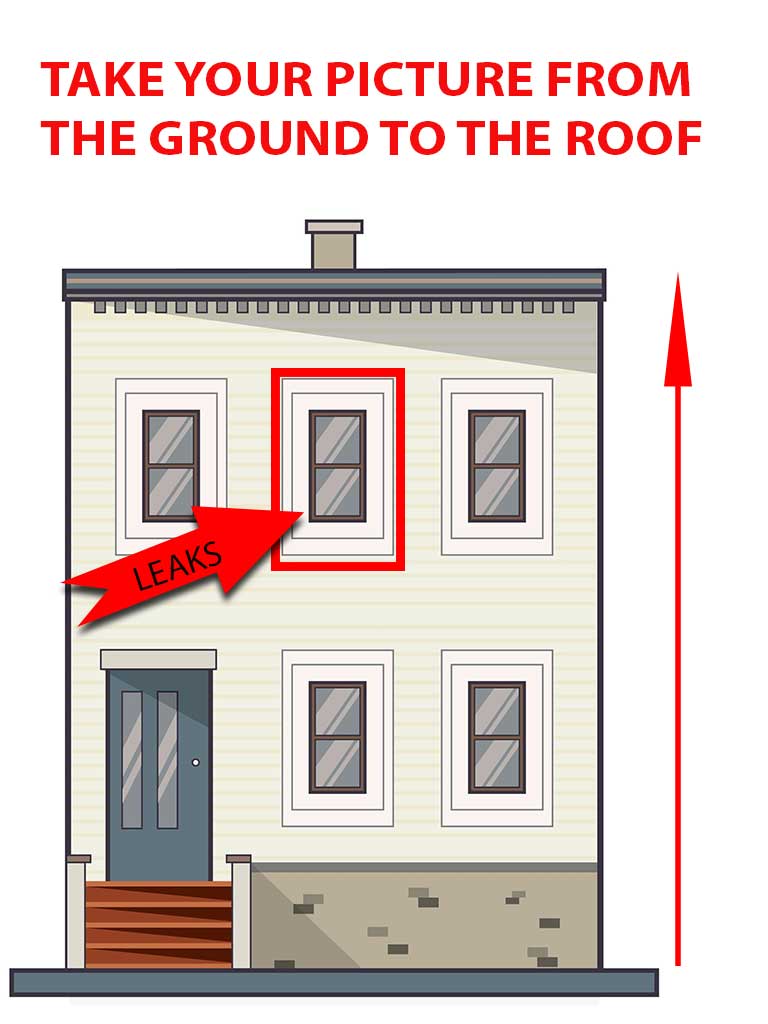
A few project details help us recommend the right test and a realistic duration.
01
Send photos
02
Identify areas
04
We review
05
Get an estimate
What We Need From You Before Providing a Price
Frequently Asked Questions
Types of Buildings
There are so many different styles of buildings we test. Below are a few examples of the types of buildings.
- Single-family homes
- Condos
- Apartments
- Multi-family Homes
- Commercial buildings
- High-rise buildings
- New construction Homes
Type of Testing Required
The AAMA and ASTM have multiple different standards for testing a wide variety of conditions and systems. These systems can range from decks, to roofs, to windows, doors, walls and more. One of the biggest benefits to these standardized tests are that they are repeatable. This means these tests can be repeated at a later date and time for such things as litigation. Choosing the correct test is important and once decided should be administered by a professional testing agency.
- ASTM E1105
- AAMA 501
- ASTM E2128
- ASTM E5957
- ASTM E783
Some Reasons why Homeowners Typically Call Us For Water Intrusion Testing;
- Window leaks - We test windows for leaks from either rain or from improper installation. In some cases we perform quality assurance testing which will test the window as it's newly installed to ensure the window was installed properly.
- Sliding door leaks - We probably perform hundreds of sliding glass door water infiltration tests annually. Sometimes the testing is for brand new newly installed doors, and other times it's forensic and we're testing to determine if the doors are installing correctly or just old and leaking. There are cases, however, where a homeowner in a multi unit complex is challenging the HOA or property management as to whose responsibility is for leaking sliding glass door.
- Exterior wall leaks - Building envelope testing has to be the most popular testing we provide. Whether it's to determine if the building paper is installed correctly and not leaking or if it's old and I need a replacement.
- Roof-to-wall transitions - Roof to wall transitions have to be some of the most popular roof tests we provide as a form of quality insurance to the homeowner.
- Balcony/deck leaks - Here in Southern California deck systems and balconies leak quite often. The waterproofing membrane which make the systems water tight is not installed correctly will fail with the sign of first rain. We provide testing for decks and balconies that will locate the area which leaks.
- Stucco leaks - Stucco rain leaks are tests which we provide on a weekly basis. There's no shortage of stucco failure here in Southern California. Although the building envelope may be a fault, many homeowners understand had in order to find the water infiltration at its source, the testing of an entire wall and small sections is required.
- Garage leaks - Leaks that happen in garages, which in some cases are connected to the main building at their side, tender Leak at these connections.
- Ceiling water stains - When we are Called out to a property where ceiling leaks are the main complaint item, our observation we usually start with anything that might be located above or on the side of this area. Some of these systems might be garages or decks for example.
- Rain-related leaks - Southern California, although it doesn't rain all that often when it does, it really comes down hard and for what seems to be a long time. Our company specializes in rain leak detection.
- Recurring leaks - Hard to find leaks share our specialty. Recurring leaks are no different. For us, water infiltration testing comes naturally easy. So if you call and say you have a reoccurring leak to us, we are first empathetic as we know how difficult it can be to be subjected to leaking every single rain event.
Reasons Why Commercial Contractors and Multi Unit, (HOA) Call us For Water Intrusion testing
- Apartment buildings - Many apartment buildings possess multiple different water intrusion issues with windows, doors, walls, roofs and skylights just to name a few systems.
- Condominiums - With Condominiums the home owners association will typically take care of the exterior of the building with such systems like walls, decks, doors, windows and roof systems. BLD testing agency can easily test all these systems and more.
- HOA communities - Many times an HOA management company will hire us for the testing of some system within their building in order to locate and repairs the issue or, in some cases, we provide the testing service which will prove which party (homeowner vs. HOA) is ultimately responsible for the repairs. In some cases this can involve litigation.
- Commercial properties - Commercial properties can include such buildings as stores, multi family housing, schools, hospitals etc... Testing for many of these commercial properties can fall under so many different standards like the ASTM E1105, ASTM 5957, ASTM 783, AAMA 501... as the issues an be many.
- New construction - New construction can usually fall under one category, quality assurance testing. This type of testing is done just after the system, whatever that is, was just recently installed. Windows are a great example of quality assurance testing. These systems are tested immediately after they are installed to ensure they were installed in accordance with the manufactures specifications.
- Building envelope investigations - The building envelope can encompass so many different systems like windows, walls, roofs, doors... just about anythings that makes up the exterior of the building designed to resist the elements. BLD testing agency has the experience and equipment to properly investigate building envelope systems in commercial buildings.
- Warranty investigations - Here in California there is a warranty period of 10 years for a building to resist water intrusion. We provide testing for these buildings in order to determine whether or not a building leak is within the 10 year warranty period.
- Construction defect investigations - California, Arizona, Nevada, Utah, are states we service and provide construction defect litigation testing.
Forensic Water Intrusion Testing, Not a Leak Detection Company
- Construction defect investigation - Our company performs construction defect litigation investigation. Not only do we perform water infiltration testing in the capacity of quality assurance but we perform quite a lot of construction defect investigations through testing.
- Contractor disputes - We perform many, many water intrusion tests annually for contractor disputes. in most cases it's the homeowner vs the contractor but not always. There are a number of these tests that are actually contractor vs contractor. We dont simply perform leak detection we actually solve issues which solve disputes.
- Insurance claims - Our company works for multiple insurance companies throughout the western United States. A great many of the testing we do for them is not leak detection but actual forensic testing.
- Warranty claims - Home owner and business owners need a company that can perform water infiltration testing that is not leak detection. We can perform testing that provides closure for warranty claims.
- Expert witness matters and Litigation support - Marc Mazza performs expert witness testimony regarding the testing which we preform.
- Determining probable source of water - One of our duties as water intrusion specialists is to not just find the issue but determine the exact cause of the water intrusion. Unlike so-called leak detection experts.
- Documenting observed conditions - Our reporting of the conditions we test is well documented in our reporting system. Our reports are extremely thorough and cover the necessary information needed to perform repairs, unlike individuals who may call themselves leak detection professionals.
Some of the Different ASTM and AAMA Tests We Perform in Arizona, California, Nevada, Utah...
ASTM E1105
The ASTM E1105 is a field water penetration test of newly installed fenestration products. This test is performed in the field which can be at a home, a business or commercial building. It involves a pressure chamber and a calibrated spray rack system. The filed version differs from the lab version, ASTM 331.
AAMA 501.2
The purpose of the AAMA 501.2, also known as the wand test. According to the AAMA document, "is to provide a quality assurance and diagnostic field water penetration check method for installed storefronts, curtain walls and sloped glazing systems. The procedure outlined in this document is not intended to test the rated or specified water performance representative of a wind driven rain event. AAMA 503 is the proper test method for field testing of storefronts, curtain walls and slope glazing for air leakage resistance and water penetration resistance performance."
ASTM E2128
The ASTM 2128 is a field test which locates water infiltration in wall systems. In the words of the ASTM 2128 document, 'This guide describes methods for determining and evaluating causes of water leakage of exterior walls. For this purpose, water penetration is considered leakage, and therefore problematic, if it exceeds the planned resistance or temporary retention and drainage capacity of the wall, is causing or is likely to cause premature deterioration of a building or its contents, or is adversely affecting the performance of other components.
A wall is considered a system including its exterior and interior finishes, fenestration, structural components and components for maintaining the building interior environment.
Investigative techniques discussed may be intrusive, disruptive or destructive. It is the responsibility of the investigator to establish the limitations of use, to anticipate and advise of the destructive nature of some procedures, and to plan for patching and selective reconstruction as necessary."
ASTM E5957
The ASTM 5957 is designed to test waterproofed membranes on such surfaces as decks, basins, shower pans or parking garages for example, but not roofing surfaces. This excerpt taken from the ASTM 5957 test document. " This guide provides the user with a method for testing the watertightness of waterproofing installations applied to horizontal surfaces having a slope not greater than 20 mm/m (2% slope) (1⁄4 in. per ft).
This guide is intended for waterproofing installation on parking garages and plaza deck type applications over habitable spaces or on elevated structures, but is not intended for use on building roofing systems. Applicable waterproofing membrane installations that may be tested using this guide are fully adhered or bonded sheet membranes, liquid or fluid applied membranes, or loose laid sheet membranes."
ASTM E783
The ASTTM E783 air infiltration test is usually performed along side the ASTM E1105 water penetration test. "This test method provides a field procedure for determining the air leakage rates of installed exterior windows and doors.
This test method is applicable to exterior windows and doors and is intended to measure only such leakage associated with the assembly and not the leakage through openings between the assemblies and adjacent construction. The test method can be adapted for the latter purpose, provided the potential paths of air movement and the sources of infiltration and exfiltration can be identified, controlled, or eliminated.
This test method attempts to create and given set of natural environmental conditions. There is a strong possibility that the test method or the test apparatus may, by virtue of their design and use, induce air leakage that does not occur under natural environmental exposure."
Destructive vs Non-Destructive Testing
In the world of water penetration testing whether its a wall test, a window test a door test or a deck test, there's only a couple ways to go about performing these tests with 100% certainty that you have in fact found the water intrusion issue. You either remove building finishes like drywall for example, or you observe it from the exterior side of the wall.
Destructive testing
So there are two situations where destructive testing is used in water infiltration testing. The first is the removal of building finishes like drywall to locate an active leak and or put eyes and hands not the actual water entering the building from the exterior. In other words, you remove the interior drywall so you can actually watch water entering the building.
The second situation where destructive testing is used in water penetration testing is the removal of finishes on the exterior side of the building. This is reserved for a different forensic type investigation where you can take the building apart piece by piece to locate the fault in the sequence of building material as applied.
In other words, you take the building apart from the outside to see where the defect is in the construction of the building system is. It can be a deck, skylight, roof, or just about any system in construction.
Non- Destructive testing
I feel like non destructive testing is a much easier topic to explain. Basically, and just as it's described, the observations you undertake into the determining where water infiltration derives, is performed without removing any wall covering materials. Yes, thats correct. You observe the water leaks as it enters the building without removing any building finishes.
Typically this is done with the use of moisture meters, moisture mapping, and an infrared camera. In full disclosure I must admit that the use of an infrared camera to locate leaks is never 100%, meaning, you can see moisture in a wall system for example, but never know where the water actually enters the building wall.
Heres how that plays out... let's say water enters the wall through an opening. The water has to somehow make its way through 4-6" of wood stud gap, then 4-6" of insulation just to show in a location that may be feet away from the entrance of the rain leak.
keep in mind that when water enters the building, it travels down the wall, may hit a fire-block, may get absorbed in the wood itself, or the insulation and if it makes it to the drywall so the infrared camera picks it up, it can take well over an hour in some cases. That same leak can be seen seconds after it enters when the wall finishes are missing or removed.
Whats Included With Our Water Intrusion Testing?
What you get with BLD testing agencies water intrusion testing;
Field Investigation
First step is a visual investigation
Second step is a series of moisture meter readings or mapping the area to locate the point of penetration if the wall covering is in place
We can use infrared thermography where appropriate/ when appropriate
Fourth step is the actual water intrusion testing to whatever standard required
The fifth step is documenting the process as it unfolds
Sixth step is the watching for leakage and verification either visual or with infrared
Finally we put it all together in a report
Heres a Look at Our Testing Equipment Used for Water Infiltration Testing
Calibrated spray rack system
So interestingly enough, calibrated spray rack systems can either be purchased or made in-house but the testing agency. The only requirement is that each rack be calibrated every 6 months and that it produce a spray that equals; "Water-Spray System—The water-spray system shall deliver water uniformly against the exterior surface of the test specimen at a minimum rate of 5.0 U.S. gal/ft2·h (3.4 L ⁄ m2·min).
The water-spray system shall have nozzles spaced on a uniform grid, located at a uniform distance from the test specimen and shall be adjustable to provide the specified quantity of water in such a manner as to wet all of the test specimen, uniformly and to wet those areas vulnerable to water penetration. If additional nozzles are required to provide uniformity of water spray at the edge of the test specimen, they shall be equally spaced around the entire spray grid."
501.2 Spray Wand
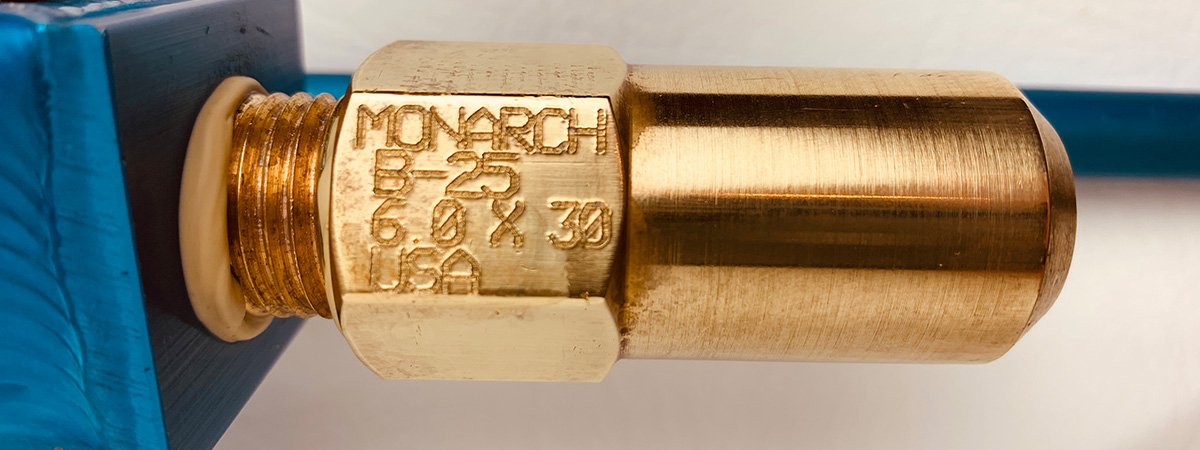
The spray wand is a fantastic tool to locate water intrusion used primarily on storefront systems, skylights, curtain wall systems, and sloped glazing. Like with the calibrated spray rack system, the wand must also be calibrated every 6 months and can also be manufactured by the testing agency. It / they can also be purchased. What makes the wand so special is its nozzle. The nozzle is very specific and is called out in the AAMA 501 field test standard. " The test shall be conducted using a Type B-25, #6.030 brass nozzle with a 13 mm (0.5 in) FPT as manufactured by Monarch Manufacturing Works. The nozzle shall be connected to a hose [19 mm (0.75 in) diameter is suggested] and shall be provided with a control valve and a pressure gauge between the valve and the nozzle."
Moisture Meters
Moisture metering devices are used to locate moisture with a material like wood, drywall, cement etc... They typically measure about 3/4" to 1" deep in these materials. Not all moisture meters are the same. We have roof deck scanners that are larger moisture meters that measure up to 12" deep. We have moisture meters with pins that poke into the surface material and some without. The cost range for a moisture meter is somewhere between $50 to $11,000 for a very good unit that is calibrated.
Infrared Cameras (Thermography)
Infrared cameras allow the user to see moisture that's located within wall systems like drywall for example, without having to remove any wall surfacing material. This is also known as non-destructive testing. Well most people don't realize that infrared cameras have been around for a very long time, but just recently within the last 15 years used in the building construction industry as a forensic tool.
Infrared cameras, see temperature differences in walls, floors, ceilings, or any other building material and put it into color within the camera of viewer. To a trained operator who understands these color differences, also understands what moisture looks like, hidden within building material materials. Infrared cameras range from $500 all the way to $75,000 and more.
Pressure Chambers
The pressure chamber in the field are essentially a box built out of wood and clear vinyl, and installed directly onto a window, door, wall, skylight, or curtain wall, System. The pressure chambers allow for the pressurization of these building components to determine whether or not these individual components perform according to their laboratory testing. In other words, when a window for example is tested in a laboratory, it is pressurized and tested. The pressure chamber we creates this test in the field. What's the pressure chamber is applied to the specimen, it is pressurized with a vacuum to the appropriate field pressure to determine its effectiveness.
Field Test Reporting
Water Penetration Testing Reporting cost $200 a day for every day of testing
Field test reporting is not automatically included with all tests. We give all clients the option of whether or not to have testing reports included with the field testing.
What is Included in the Field Test Report?
- Date and time
- Current weather conditions
- Areas water tested
- Testing method or standard
- Test duration (how long was the test)
- Equipment used (spray rack, wand, etc..)
- Observations
- Moisture findings
- Leakage locations
- Test results
- Photographs and video
- Recommendations, if applicable