
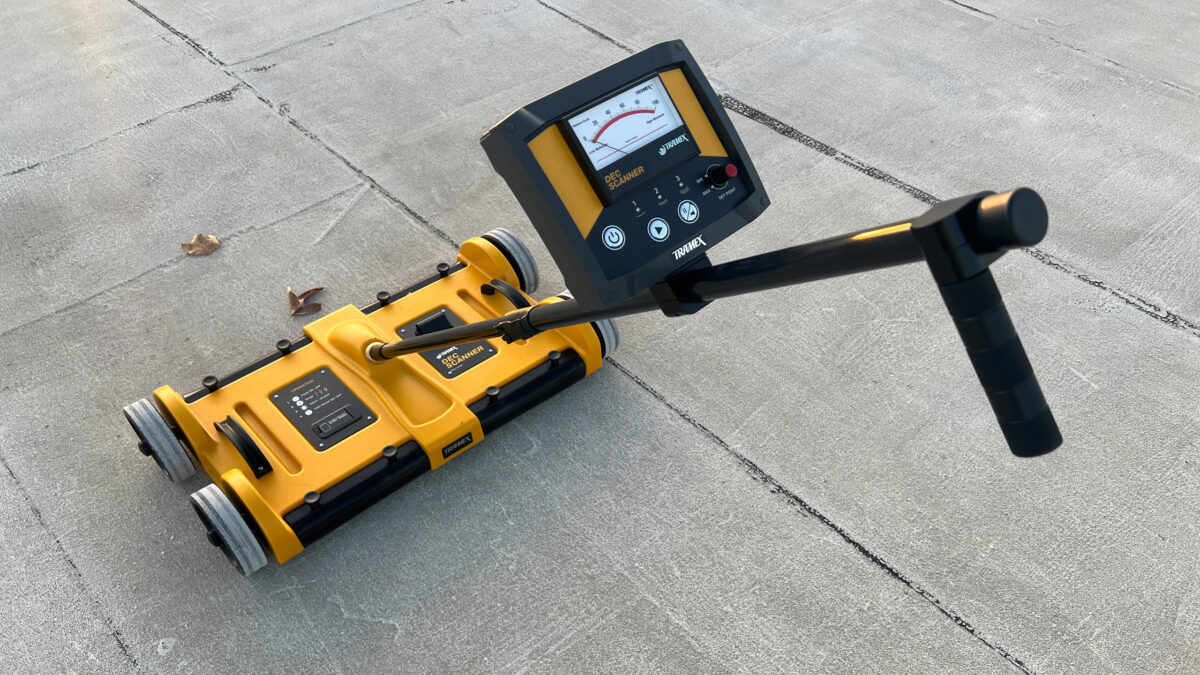
Roof Deck Scanning: Find Potential Trapped Moisture Without Opening the Roof
Moisture can become trapped beneath a roof or waterproofing membrane without showing where it entered. A roof deck moisture scan can help identify areas that may have elevated moisture, giving building owners and project teams useful information when investigating a leak, assessing roof condition, or planning repairs.
Building Leak Detection provides flat-roof scanning as part of its water intrusion testing services. The scan is a non-destructive way to survey compatible roofing and waterproofing assemblies for potential moisture conditions. Results can help guide further investigation, but they should be interpreted in the context of the roof’s construction and verified where appropriate.
What is roof deck scanning?
Roof deck scanning is a survey of a low-slope roof or waterproofing system using a non-destructive electrical impedance scanner. The instrument takes readings across the roof surface and helps identify areas with readings that differ from surrounding areas.
ASTM D7954/D7954M-22a describes the standard practice for using electrical impedance scanners to locate moisture and evaluate comparative moisture content in certain insulated low-slope roofing and waterproofing systems. “Comparative” matters: the scan helps identify relative differences in readings; by itself, it does not provide a laboratory measurement of the moisture content in every part of the roof. ASTM D7954/D7954M-22a
How does a roof scanner identify potential moisture?
Electrical impedance scanners measure how the roofing assembly responds to an electrical signal. Moisture can affect that response, so an operator can survey the roof systematically and note areas with elevated readings compared with nearby areas.
ASTM D7954 describes two general survey approaches: systematic, continuous scanning and scanning in a grid pattern. The survey method and interpretation depend on the roof’s materials, assembly, surface conditions, and environmental conditions.
A scan identifies potential moisture conditions. Differences in materials or other roof features can also affect readings, so the operator must consider the construction and interpret the pattern rather than treat every elevated reading as proof of trapped water.
When does ASTM D7954/D7954M-22a apply?
ASTM D7954/D7954M-22a is a standard practice, not a standalone leak test or a guarantee that a roof is watertight. It applies to electrical impedance moisture surveys of certain low-slope roofing and waterproofing assemblies, including assemblies with insulation above the deck beneath electrically nonconductive membranes. It can also apply to some systems without insulation over moisture-absorbing decks, such as wood, concrete, or gypsum.
The practice does not suit every roof. ASTM identifies limitations for electrically conductive surface coverings and near-surface metal, black EPDM membranes or coatings, and aluminum foil-faced materials, which can produce unsuitable or false-positive readings. It also cautions that, with the overburden in place, impedance scanning is not appropriate for inverted or protected roof assemblies because the scanner cannot distinguish moisture above the membrane from moisture below it. The roof assembly should be reviewed before deciding whether this method is appropriate. ASTM standard scope and limitations
What can a roof deck scan tell you?
A roof deck scan can help:
- Identify areas with elevated comparative moisture readings.
- Map areas that may warrant closer inspection or verification.
- Support roof condition assessment, preventive maintenance, and planning before repair or replacement.
- Help narrow where further investigation may be useful.
ASTM notes that excess moisture in roofing or waterproofing systems can affect system performance and thermal resistance. A moisture survey can therefore be one useful part of a broader roof assessment.
What can’t a scan determine on its own?
A scan does not, by itself:
- Confirm the exact quantity of water in every location.
- Prove that a specific elevated reading is moisture.
- Identify the precise leak entry point or cause.
- Establish the full condition of the roof assembly or determine which repair is needed.
- Replace direct verification when that is required.
ASTM D7954 states that the practice alone does not determine the cause of moisture infiltration, although survey results may help trace excess moisture toward an entry point. The standard also addresses verification of impedance data using invasive procedures such as core samples. When confirmation is needed, a qualified professional can determine whether and where to take a core and how to interpret it alongside the scan.
A useful step in roof leak investigation
Roof deck scanning can help locate areas of concern without opening the roof across its full surface. Its value depends on whether the roof assembly is suitable for the method and whether the readings are interpreted and verified appropriately.
Building Leak Detection offers flat-roof testing using non-invasive electrical impedance scanning to identify potential hidden wet areas beneath compatible membranes. If you are investigating a roof leak or assessing a low-slope roof, contact Building Leak Detection to discuss the roof assembly, the testing question, and whether a moisture survey may be appropriate. Building Leak Detection flat-roof inspection information