
Fenestration Testing in Los Angeles | ASTM E1105 & AAMA 501.2 Specialists
For many of us when we hear the term, “Fenestration” We immediately draw a blank as to its meaning. For others in the business it’s basically windows, doors and skylights. The official Google definition for Fenestration Testing is this; “Fenestration means the design, placement, and arrangement of openings like windows, doors, and skylights in a building.”
What exactly is Fenestration testing?
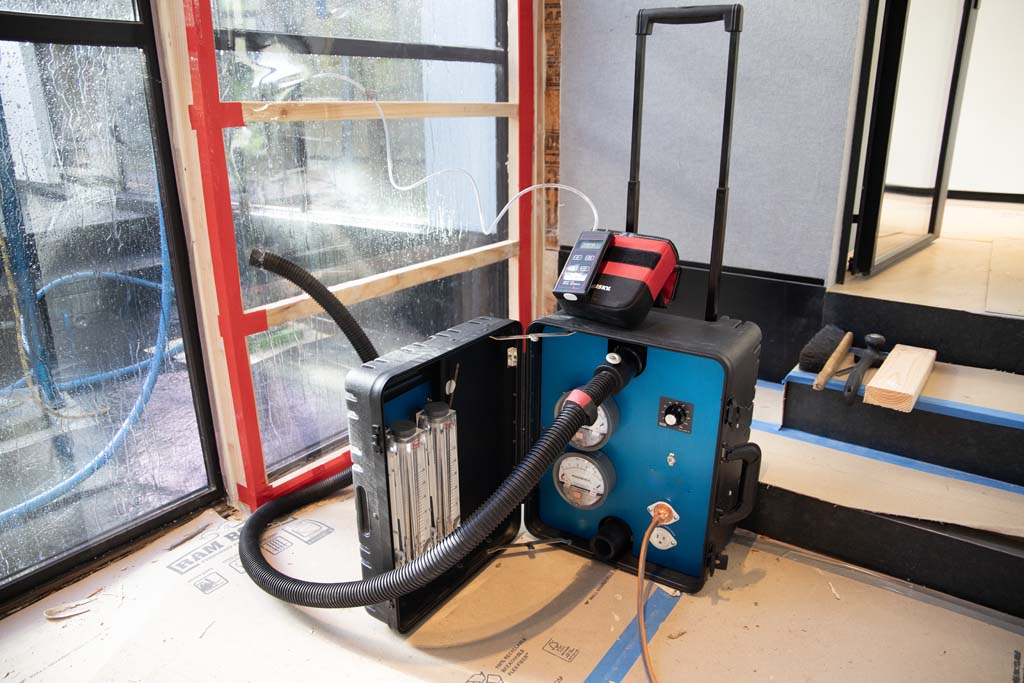
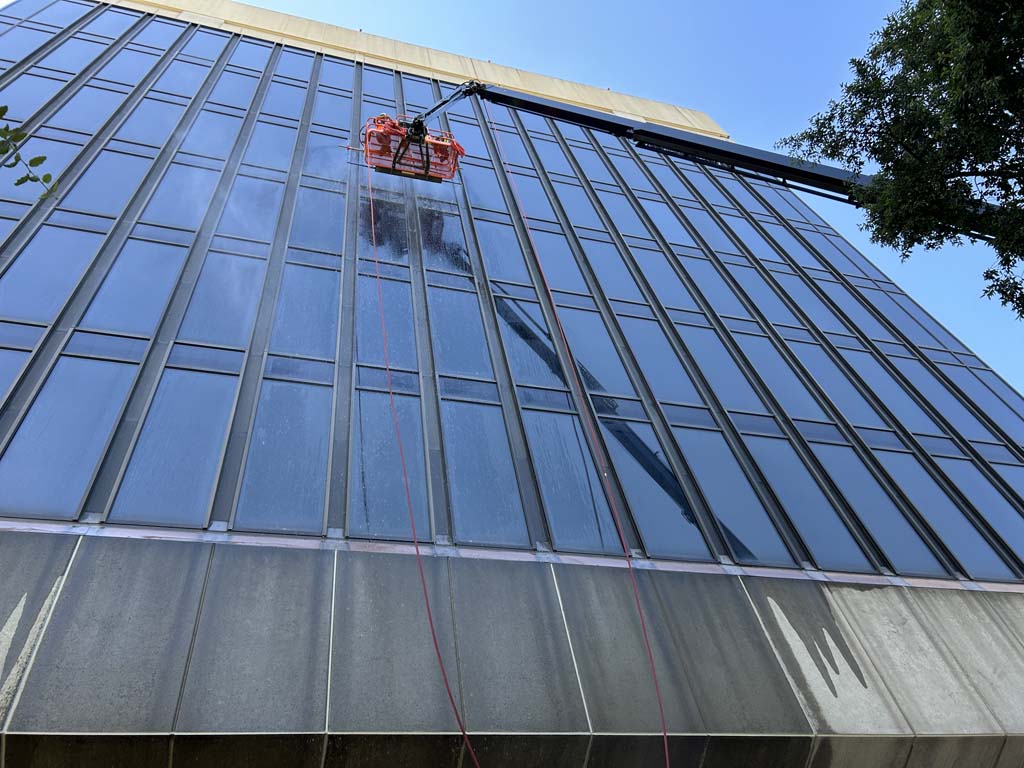 Fenestration Testing in Los Angeles is just the official testing of these windows, doors and skylights by the use of calibrated equipment such as the spray rack or spray wand. These tests can include the ASTM E1105 Testing standard, the AAMA 501 test standard, the AAMA 502, the ASTM E1105 or the ASTM 331 and ASTM 547. All of these standardized Tests share one similarity… they are all done (usually) in a “Quality Assurance” capacity as opposed to a forensic investigation. Forensic evaluation basically just mean the tests are performed in an investigative capacity, much like after a building is built and starts to simply leak for any unknown reason.
So What is Quality Assurance testing you might ask? Well, in the simplest of terms it’s the testing of fenestration products just after they have been installed into the building. These fenestration products can be in commercial, industrial, or residential buildings. In many cases the test of these products is usually pass or fail. This means the unit passes if it does not leak and fail if it does. In the event the products fails it will be re tested once the problem has been fixed.
Lets discuss some of the most popular tests we perform in Los Angeles
The ASTM E1105 Testing standard here in Los Angeles has to be one of our most popular tests. Reason being is because the architects and designers feel this test is extremely robust enough to prove whether or not a newly installed window or door is defective or that the fenestration piece is the incorrect type of its application. For example, the window may have a fenestration testing Design pressure that is perfect for a residential home but not for a high-rise building. Lastly, ASTM E1105 Testing in Los Angeles should be performed by a professional testing agency such as BLD testing agency.
Now take the AAMA 502, it’s a close brother to teh ASTM E1105 test standard. The AAMA 502 test standard is described like this… AAMA 502, “Voluntary Specification for Field Testing of Newly Installed Fenestration Products.” AAMA 502 specifies air leakage resistance and water penetration resistance field testing of fenestration product specimens during construction and prior to issuance of the building occupancy permit.
Third-party fenestration testing that is local here in Los Angeles
 The AAMA 502 goes onto describe the use of the test standard for field testing here in Los Angeles and abroad. “This specification establishes the requirements for field test specimens, apparatus, sampling, test procedures and test reports to be used in verifying the air infiltration resistance performance and water penetration resistance performance of newly installed fenestration products by using a Third-party fenestration testing. Our company BLD Testing Agency performs these fenestration tests throughout Los Angeles, the entire state of California as well as Arizona, Nevada, Utah, New Mexico and a few other states.
This specification, the AAMA 502, is applicable during construction, prior to issuance of the building occupancy permit but no later than six months after installation of the fenestration product. The purpose of this specification is to provide a method which can be used by a Third-party fenestration testing agency like BLD Testing Agency in Los Angeles to evaluate the installed performance of fenestration products for air leakage resistance and water penetration resistance under controllable, reproducible and appropriate conditions.”this is a basis for Fenestration Testing in Los Angeles
Where the ASTM E1105 tests the window for water penetration here in Los Angeles, and the ASTM 783 tests the fenestration product for air penetration, the AAMA 502 tests for both. Now is this a good thing? I suppose it’s most useful because the two tests are combined under one single standard which is less confusing when field testing.
The AAMA appears to be mentioned most often when field tested when compared to the ASTM E1105 or the ASTM 783. Im not sure why this is, perhaps it’s because the AAMA is geared towards developing standards for fenestration where the ASTM creates standards for many different trades worldwide.
Fenestration Testing Services
 Here in the great city of Los Angeles there is no shortage for new construction. But with all this new construction who can you rely on as a disinterested neutral third party testing agency? Making sure the company you choose to perform your Fenestration Testing Here in Los Angeles under standards the different test standards and the correct way to administer these tests int he field. Its worth mentioning that all fenestration is tested within a laboratory and there its “rated” for performance.
Moreover, the field is where we administer fenestration testing here in LA and other areas around Southern California, we use the lab results as a reference point to determine what the actual water penetration and air leakage field test pressures which the testing will be based on. As a testing agency, we receive many different requests around the Los Angeles county for both air and water infiltration testing, otherwise known as fenestration testing.
A few common questions we feel are useful to help answer regarding Fenestration Testing here in Southern California.
The ASTM E1105 Testing standard and why its the first choice for builders here in Los Angeles
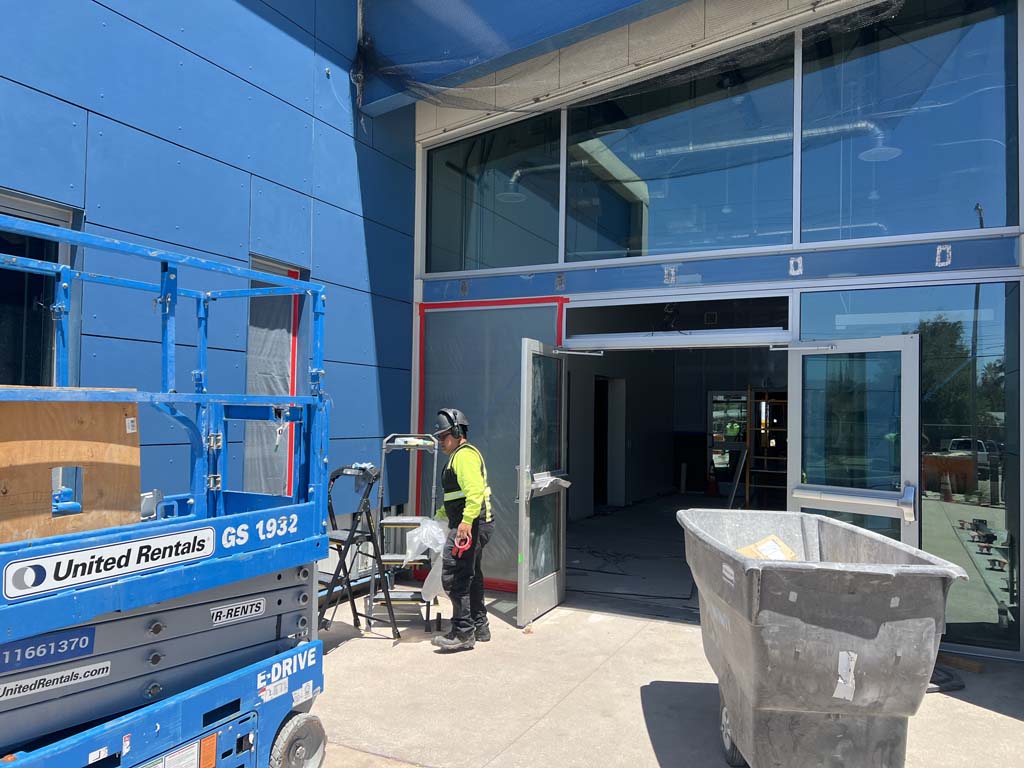 Los Angeles is a huge place when you consider it covers about 502 square miles. Consider the fact that within this space are many hundreds and thousands of buildings in construction as we speak. With water infiltration on the minds of just about every builder here in LA, the race to build a building that is not only water tight but esthetically pleasing to look at.
ASTM E1105 Water Penetration Testing
So because there was an obvious need to ensure against water infiltration for newly installed fenestration products, standardized testing specific to windows, doors and skylights had to be developed. Essentially, this standard is designed to apply a specific amount of water and wind pressure in the field to determine whether or not the fenestration product is capable of withstanding the heaviest of rain and windless Angeles can throw at it.
The ASTM E783 Air Leakage Test explained in easy to understand terms
So in prevailing wage, public works projects especially, an Air leakage test is requested. The request usually comes in the form of an AAMA 502 test. Within this standard are the air and water infiltration tests sort-of combined. But since we’re talking about the air infiltration portion, let’s concentrate on that. So here is the basic explanation of the air portion of this test per the AAMA 502.
Air Infiltration Test on Doors and Windows
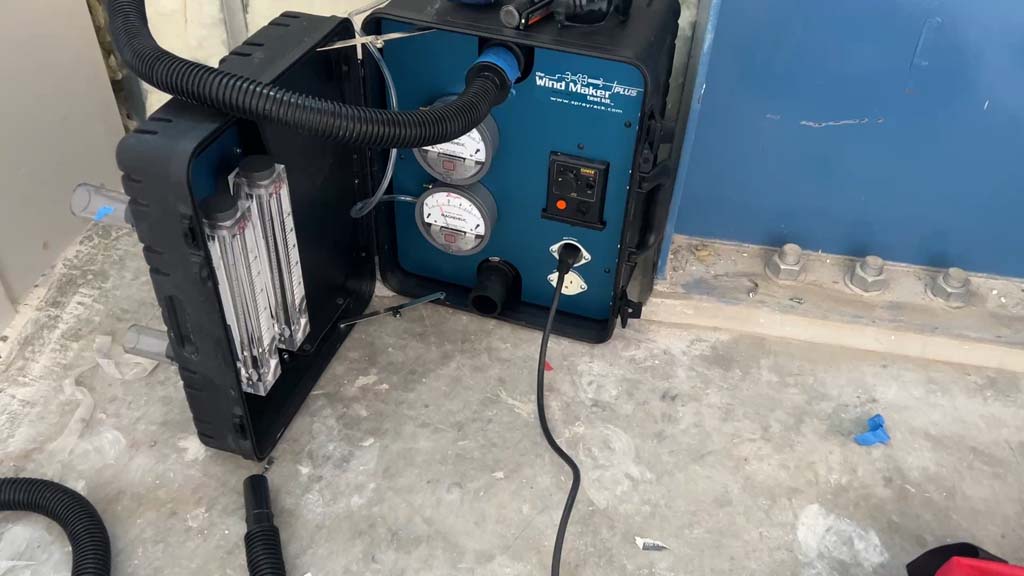
The air infiltration test tests about how much air will leak from around a newly installed window or door. During the test, special equipment made up of a vacuum system, an air chamber and a gauge to determine the pressure used.
This equipment (vacuum) creates a difference in air pressure between the inside and outside of the building, similar to what happens on a windy day. The tester measures how much air passes through the window or door. A good installation will have very little air leakage, which helps keep the building more comfortable and saves energy.
AAMA 501.2 Testing Los Angeles
Another popular window water infiltration test performed here in the Los Angeles area is the AAMA 501.2. This is a very common test usually performed on storefront fenestration products, also known as the wand test.
So to be clear, storefront glass are the types of windows you see when you walk into a convince store for example. The 501.2 test is optional for curtain Wall Testing Los Angeles. This test is performed with a very special and unique piece of equipment. The best way to describe it is that it looks like a hand-held wand.
Even the nozzle is special. It must be a Type B-25, #6.030 brass nozzle with a 13 mm (0.5 in) FPT as manufactured by Monarch. I find it interesting that AAMA can require the use of one single specific manufacture to supply the only nozzle allowed. But I digress.
This nozzle is installed at the front of the wand and there is a shutoff valve at the back. The pressure when using this piece of equipment is 30 psi.
How to perform the AAMA 501.2 test on windows
Would you like to now how to perform your own AAMA 501.2 wand fenestration test? Let me tell you how in accordance with the AAMA 501.2 document.
AAMA 501.2
6.1 The designated test area shall be divided into and evaluated in 1.5 m (5 ft) sections of the framing and joint. The nozzle shall be held normal to the plane of the wall and at a distance of 305 ± 25 mm (1 ft ± 1 in) from the location under test. Each 1.5 m (5 ft) section of test area shall be evaluated for a period of five minutes by slowly moving the nozzle back and forth over the test section (see Figure 4) while maintaining the nozzle perpendicular to the plane of the wall.NOTE 4: It is recommended that a gauge be attached to the end of the nozzle to ensure that the specified distance from the joint under test is maintained. The intent of the procedure is to indicate that each 1.5 m (5 ft) component (horizontal and vertical) is subjected to the water spray at a rate of 305 mm (1 ft) per minute. Therefore, it requires five minutes to test each 1.5 m (5 ft) length.
6.2 Working from the exterior, the wall test section shall be selectively wetted progressing from the lowest horizontal framing member, then the adjacent framing intersections, then the adjacent vertical framing members, etc. During the test, an observer on the indoor side of the wall, using a flashlight if necessary, shall check for any water leakage and shall note where it occurs.
NOTE 5: For this water leakage field check, water leakage is defined as any uncontrolled water that appears on any normally exposed interior surfaces, that is not contained or drained back to the exterior, or that can cause damage to adjacent materials or finishes. Water contained within drained flashings, gutters, and sills is not considered water leakage. The collection of up to 15 ml (1/2 oz) of water in a five minute test period on top of an interior stop or stool integral with the system shall not be considered water leakage.
6.3 If no water leakage occurs during the five minute test, the next 1.5 m (5 ft) of framing shall be wetted for five minutes, and
testing continued in this manner until the entire test area is tested.
Building Envelope Testing Los Angeles
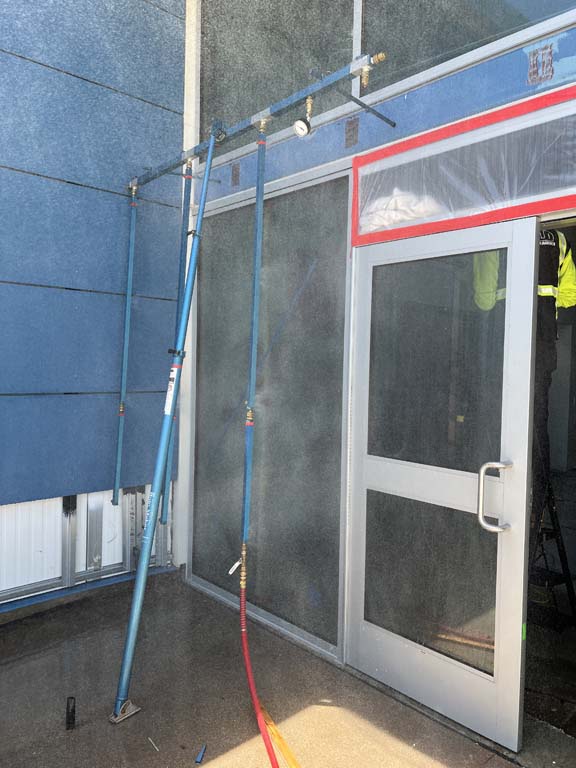
So what exactly is the building envelope? Well, the envelope is effectively the physical barrier that separates the exterior of the building from the interior of the building. Its only purpose is to protect the structure from decay and the people inside from weather. As a secondary purpose, it controls moisture, humidity, energy use and the movement of air.
Parts of the building envelope
- Roof
- Windows and doors
- Foundation
- Damage to the building
- Insulation
Building envelope testing is for the most part, a technical quality assurance or forensic evaluation of the buildings waterproof barrier, WRB or building Envelope. The reasons for having to test this envelope can include;
- Aged building paper
- New window or door installation
- Existing window or door leak
- Damage to the building
- Testing of various penetrations such as receptacles or lights for example
There are multiple ways to physically test the buildings envelope just as there are multiple different systems within the building envelope. With each of these different systems a specific test is required to properly and effectively test the different systems.
In some cases there can be multiple different tests to evaluate a specific system or sometimes, multiple systems. Take windows and walls for example. The window type can determine the very specific test, a fenestration test is required to determine if the window is faulty. Additionally, the stucco wall that the window is installed in can also be tested but by a different test standard.
Curtain Wall and Storefront Testing
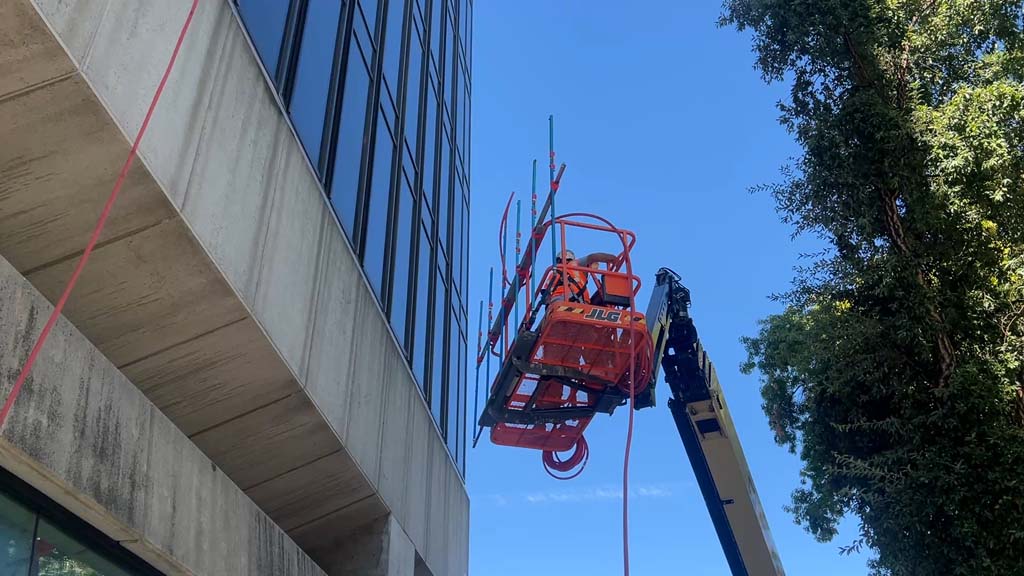 Curtain wall testing in Los Angles is typically performed by a professional fenestration testing agency. Reasons for this is easy, for one the equipment needed to perform these tests is not just expensive, its also complicated to use without prior experience.
Most testing agencies will use some type of spray rack system or spray wand which is required in the ASTM E1105 or AAMA 501. Experience acquired to administer these types of water infiltration tests is usually received from hands-on work. Many times the tester has worked for some time in the Glazing industry or is an engineer of some type.
Water Intrusion Investigations
Water intrusion investigations here in Los Angeles can cover such a wide array of building systems, needs or requirements of the client and the least of which, the testing standard.
Water intrusion investigation for stucco walls
I think it’s extremely common for people to assume that stucco walls are waterproof. This is not the case at all. Stucco walls are much like a sponge and literally absorb water despite what many believe which is that water runs off the stucco and onto the ground.
In a nutshell, a stucco wall assembly built here in Los Angeles is comprised of wood studs, building waterproof paper, lathe, weep screed flashing and of course your stucco coating.
How are stucco walls tested for water intrusion?
Starting at the bottom we have the weep screed installed on the wall sheathing. This flashing allows water to drain from the inside of the wall. We’ll speak on that in a moment.
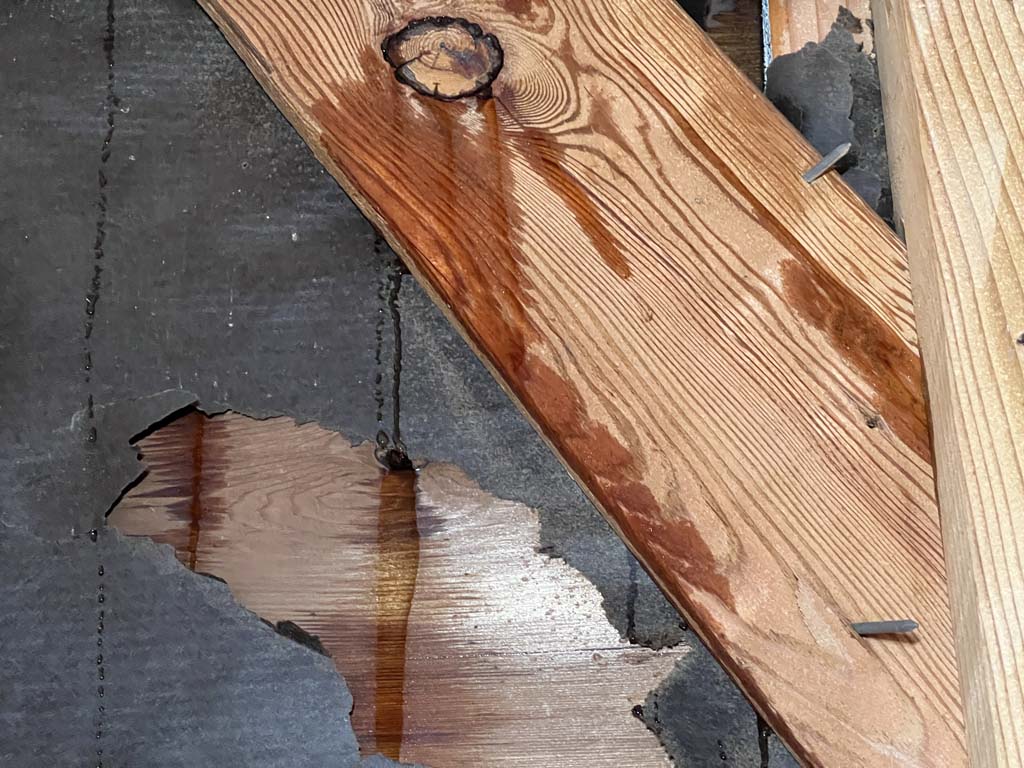
The framing including the wall sheathing or sheer wall is what allows the building paper to basically wrap the structure. This building paper is the WRP or water resistive barrier that is the last line of defense your building has to guard against water entering the structure.
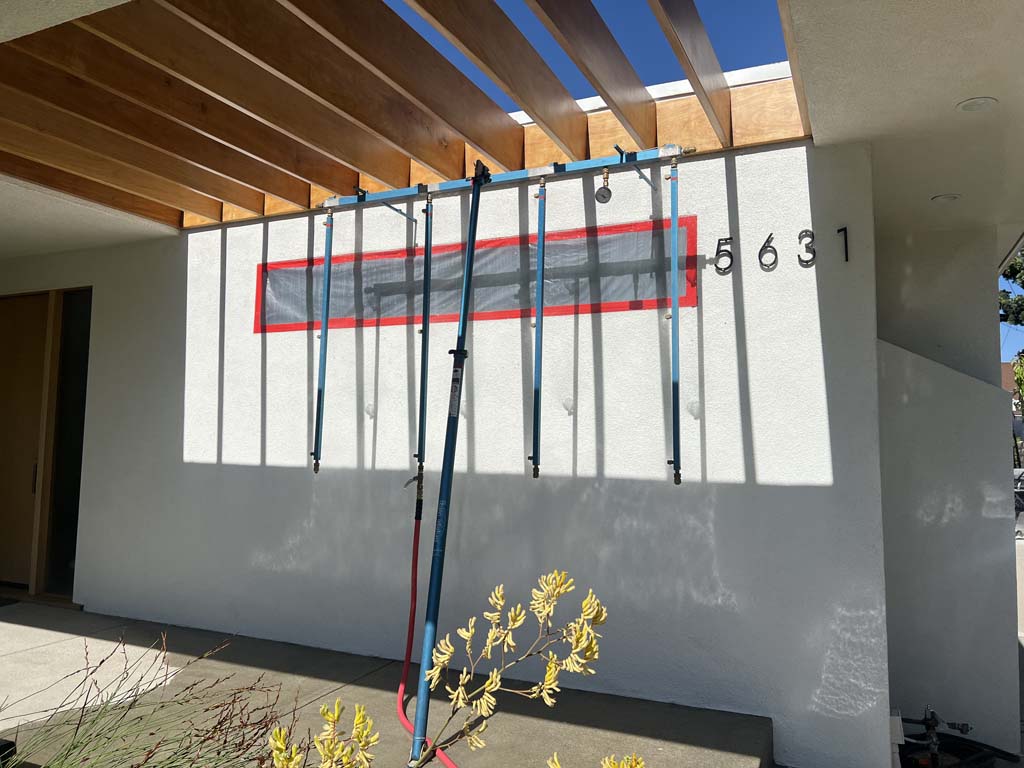 The WRB is designed to last somewhere around 50 years however, here in Los Angeles, Phoenix and Las Vegas were seen this building paper last as little as 25 years before it starts to deteriorate. At which point the water can easily pass through this barrier. Testing for water intrusion in the stucco wall system requires a lot of patience and experience. First and foremost testing always starts at the bottom of the wall and works upward.
Stucco wall water testing if started at the top would run down the walls surface therefore contaminating the test area under the area where the water is being applied. From my own experience, this is a terrible situation because the stucco is hard to dry-out. If the stucco is wet it makes understanding where the water enters the building almost impossible. The test we use for stucco walls that are known to leak is the ASTM 2128.
Water intrusion investigation for windows, skylights and doors
When it comes to fenestration testing in Los Angeles using investigative methods for windows, doors and skylights you really need to know what you’re doing as a testing agency. Believe it or not windows and doors do have limitations with respect to how much water and pressure a window can take before failure.
‘But on its face, Windows are actually pretty easy to test for leaks. It’s when the issue isn’t the window itself but the wall system or WRB that is the problem.
Isolation of the window for fenestration testing
Isolation testing is the method preferred method when trying to determine if the wall system is the issue or if the fenestration product itself is the issue. Basically, to administer a test using the isolation method the first thing you want to do is cover the window completely. That is the entire plastic, metal, or wood frame without getting tape on the wall covering (stucco).
The reason for this is that if the tape was on the stucco and you are spraying water you can easily cover the issue thereby voiding the fenestration test completely. Window Water Penetration Testing Los Angeles isn’t just about spraying the window with a water hose. No, it’s about a calculated test that is proven by a standard like the ASTM 2128.
Building Envelope Testing Los Angeles
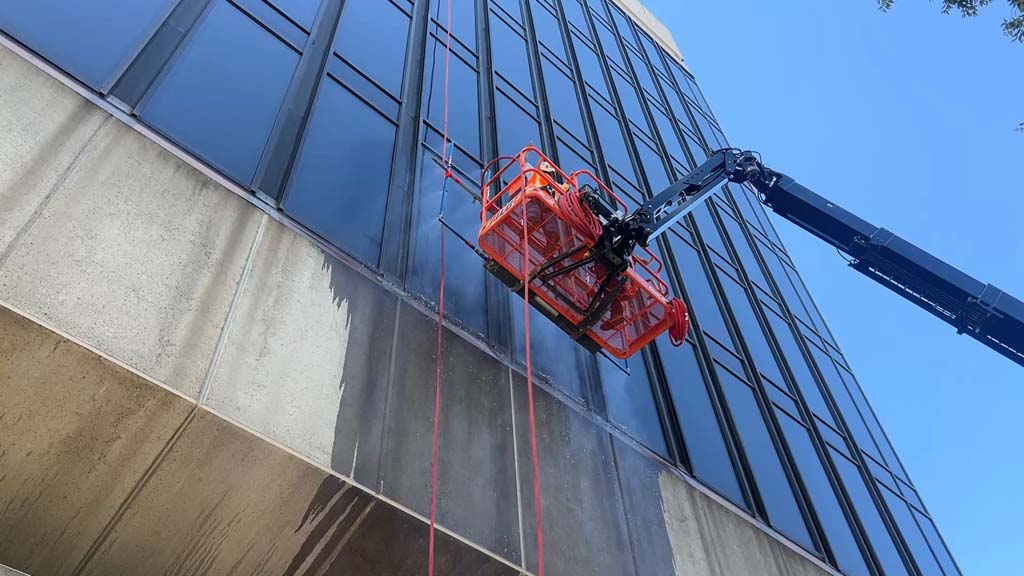 What does the Building envelope have to do with Fenestration testing? Well, technically the Buildings envelope does include windows and such, however, more times than not the person is referring to the building walls. Not all the time, but typically. But let’s take it a step further and dive a little deeper in the buildings envelope and see how it works with fenestration testing.
Here is what Chat says about the envelope
A building envelope (also called the building enclosure) is the physical barrier that separates the conditioned interior of a building from the outdoor environment. Its primary functions are to control heat, air, moisture, light, and sound while protecting the structure.The main components include:Roof System, Exterior, Foundation, windows, doors, insulation, sealants and flashings and the moisture control layers.
So as you can see the building envelope encompasses so many different systems in the construction of a building. So effectively, fenestration testing is necessary for the fenestration parts which are the windows, doors, and skylights.
What are some services we provide here in Los Angeles
BKD testing agency, or building leak detection company here in Los Angeles provides quite a few different types of tests both forensic and quality assurance. We work on residential homes, commercial buildings and public works projects.
Water Intrusion Testing Los Angeles
Water intrusion is a very serious concern especially here in the Los Angeles are with all the aging real estate buildings. The need for water intrusion testing is in high demand here for multiple different building envelope systems. So how can water intrusion testing help you? For one, it will locate leaks in Deck systems, windows, walls and doors. It will help eliminate issues like mold for example.
Commercial Window Leak Testing Los Angeles
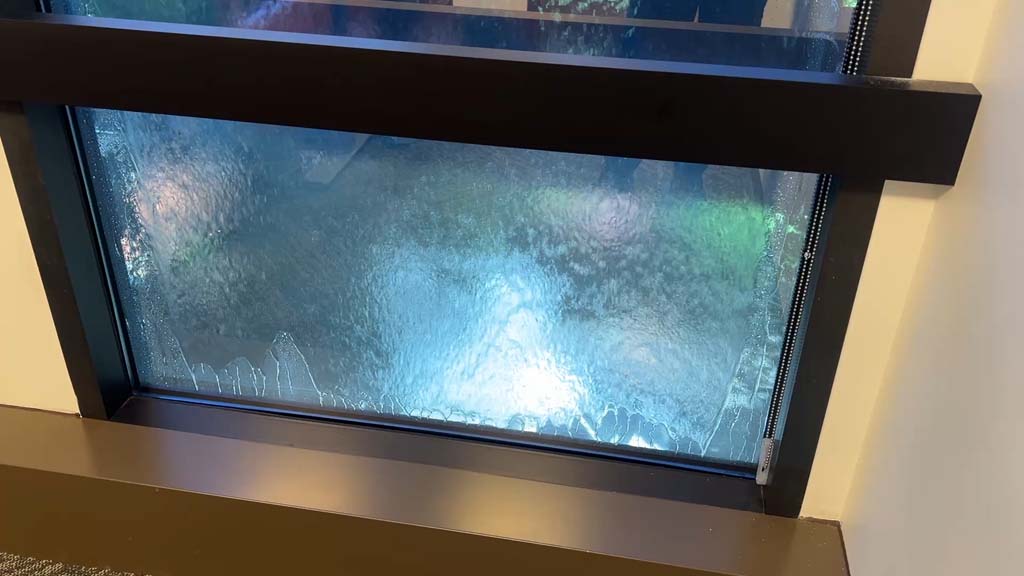 Our company performs commercial Window Water Penetration Testing Los Angeles throughout Los Angeles for both quality assurance and forensic situations. The tests which are commonly requested are the AAMA 501, AAMA 502, ASTM E1105, ASTM 5957 and the ASTM 2128. With the tests performed a comprehensive detailed report follows.
Rain Leak Testing Los Angeles
So here in Southern California we don’t see a tremendous amount of precipitation. In fact, it rains so little, I feel the Los Angeles community as a whole does little to prepare for upcoming rain events. Not only are the rain events problematic to traffic, it shows homeowners exactly where the building is failing. With respect to windows and doors, these systems seem to take the brunt of the moisture. When it comes to leaks inside the building, only fenestration testing here in Los Angeles can help determine whether the windows or the building wall system are the cause of leaks within the buildings envelope.
AAMA 502 Testing Los Angeles
What is a conversation about fenestration testing without mentioning the AAMA 501 wand test? This is a test we administer on storefront doors and windows as it utilizes a special apparatus called a wand and a special nozzle. Without the Nozzle the test is useless. But suffice it to say that this is a very useful fenestration test as we administer these tests throughout Los Angeles and California all the time.
Property Owners
So as a property owner looking for a fenestration testing agency in LA can be a nightmare simply because there aren’t many of us out there. If I had to give any one single piece of advice, it’s to use a testing agency with experience in Forensic and Quality assurance water intrusion testing. Furthermore, make sure the company is a disinterested third party Fenestration Testing agency. Because there is no contractors license for this type of niche business, you will have to rely on the individuals experience and in some cases reviews.