


Deck or Balcony Testing for Water Infiltration
Professional Deck and Balcony Water Intrusion Testing in Los Angeles and Southern California
Water infiltration through exterior decks and balconies is a common cause of moisture damage in residential and commercial buildings. When waterproofing systems fail, water can penetrate beneath the deck surface, migrate through building assemblies, and damage structural framing, ceilings, walls, and interior finishes.
At Building Leak Detection, we specialize in professional deck and balcony water intrusion testing throughout Los Angeles and Southern California. Our investigative services help homeowners, property managers, homeowners associations (HOAs), contractors, and construction defect attorneys identify the sources of water infiltration and evaluate the performance of existing waterproofing systems.
With more than 30 years of experience in building diagnostics and water intrusion investigations, we utilize established industry testing procedures, specialized equipment, and forensic evaluation techniques to investigate suspected waterproofing failures.
What Is Deck and Balcony Water Intrusion Testing?
Deck and balcony water intrusion testing is a diagnostic procedure used to evaluate the watertightness of exterior walking surfaces and associated waterproofing assemblies.
The purpose of testing is to determine whether water is penetrating through a deck or balcony waterproofing system and, when possible, identify the location and contributing conditions responsible for the leakage.
Exterior decks and balconies are exposed to rain, ultraviolet radiation, temperature changes, structural movement, and regular pedestrian traffic. Over time, these conditions can contribute to the deterioration of waterproofing materials, sealants, flashing systems, and drainage components.
However, water infiltration is not always the result of deteriorated waterproofing materials. In many cases, leaks originate from improper installation, defective flashing details, inadequate drainage, or poorly integrated building components.
Professional testing helps distinguish between these conditions and provides information necessary to develop appropriate repair recommendations.
Common Causes of Deck and Balcony Water Leaks
Water intrusion through exterior decks and balconies can originate from numerous locations within the waterproofing assembly.
Common contributing conditions include:
- Deteriorated or improperly installed waterproofing membranes.
- Inadequate waterproofing at wall-to-deck intersections.
- Missing, damaged, or improperly integrated flashing.
- Improper waterproofing around balcony doors and thresholds.
- Cracks or separations in waterproof deck coatings.
- Defective waterproofing around guardrail and railing penetrations.
- Inadequate deck slope or improper surface drainage.
- Clogged or improperly installed deck drains and scuppers.
- Deteriorated sealants at construction joints.
- Improperly waterproofed fastener penetrations.
- Movement or separation between adjoining building materials.
- Defective waterproofing at deck edges and perimeter terminations.
Water entering through these locations may travel considerable distances before becoming visible inside the building.
Consequently, the location of an interior water stain does not necessarily identify the actual source of the leak.
ASTM D5957 Flood Testing for Decks and Balconies
One method used to evaluate certain horizontal waterproofing systems is flood testing in accordance with ASTM D5957, Standard Guide for Flood Testing Horizontal Waterproofing Installations.
ASTM D5957 provides guidance for evaluating horizontal waterproofing installations by temporarily retaining water over the surface and observing whether leakage occurs.
This testing method can be particularly useful for investigating certain waterproofed decks, balconies, terraces, and other horizontal assemblies where the construction and drainage configuration permit controlled water containment.
How Does a Deck Flood Test Work?
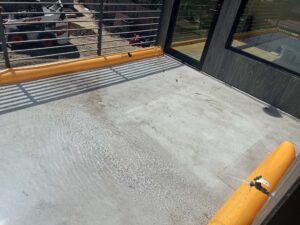
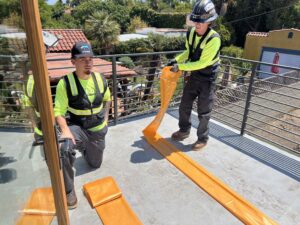
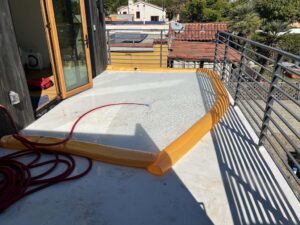
During a flood test, the waterproofed surface is temporarily subjected to standing water under controlled conditions.
The general testing process includes:
1. Preliminary Inspection
The deck or balcony is visually examined to identify existing conditions, drainage components, penetrations, waterproofing terminations, and other features that may influence testing.
2. Evaluation of Testing Conditions
Before testing begins, the waterproofing assembly, drainage configuration, structural loading limitations, and potential consequences of water exposure are evaluated.
Not every deck or balcony is suitable for flood testing.
3. Controlled Water Application
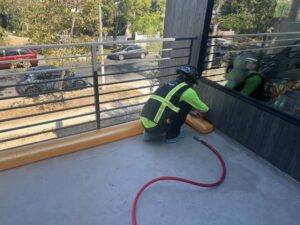
When appropriate, water is introduced and temporarily retained over the designated test area.
Water depth and test duration are established according to the applicable testing requirements and project conditions.
4. Interior Monitoring
Accessible areas beneath and adjacent to the test location are monitored for evidence of water infiltration.
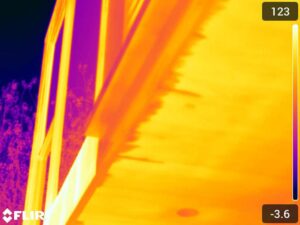
Moisture meters, thermal imaging equipment, and visual observations may be used to document developing moisture conditions.
5. Documentation and Reporting
The testing conditions, observations, and results are documented in a written report.
When leakage occurs, additional investigation may be recommended to determine the precise location and mechanism of the waterproofing failure.
Important: Flood testing must be performed only when the assembly can safely accommodate the anticipated water loading and testing conditions. Improperly conducted flood testing can cause substantial property damage.
ASTM E2128 Water Intrusion Investigations of Decks and Balconies
Not every balcony or deck leak can be adequately investigated using flood testing alone.
In many situations, water infiltration originates from vertical surfaces, door thresholds, flashing transitions, railing attachments, or other building components associated with the deck assembly.
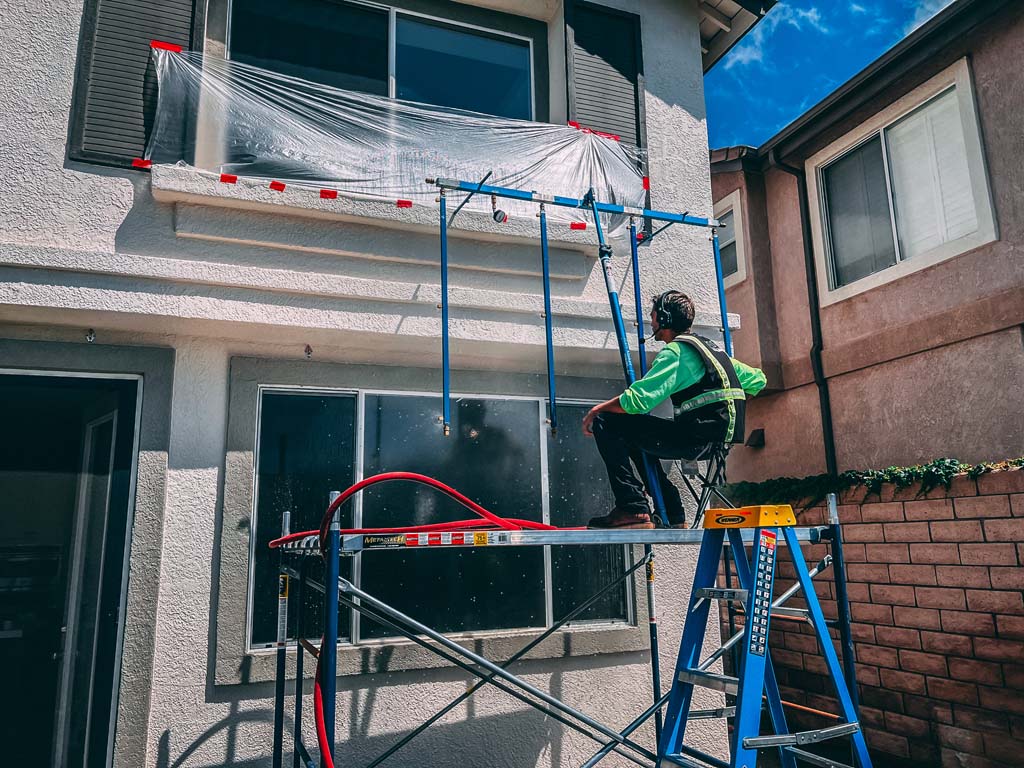
For these investigations, Building Leak Detection may utilize procedures informed by ASTM E2128, Standard Guide for Evaluating Water Leakage of Building Walls.
ASTM E2128 establishes a systematic approach to investigating water leakage through exterior building walls and related components.
Although ASTM E2128 is not a dedicated deck waterproofing flood-test standard, its investigative principles can be valuable when evaluating the interaction between balconies, exterior walls, doors, and adjacent building systems.
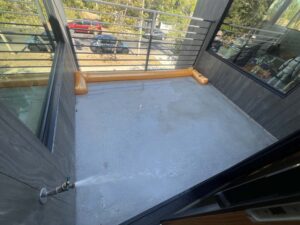
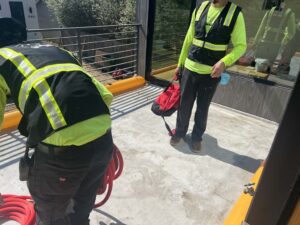
Our investigations may include controlled water application to individual components to help isolate the source of leakage.
For example, a balcony leak may originate from the waterproofing membrane, but it may also result from water entering around a sliding glass door, penetrating through the exterior wall, or migrating through improperly installed flashing.
By evaluating these components individually, we can help determine which building system is contributing to the observed water infiltration.
Testing Balcony Doors, Thresholds, and Flashing
One of the most vulnerable locations for water infiltration is the intersection between an exterior balcony and its adjoining door system.
Sliding glass doors, French doors, and other exterior door assemblies depend on properly designed and installed flashing, drainage, and waterproofing transitions.
Common deficiencies include inadequate sill pan flashing, improperly integrated waterproofing membranes, insufficient drainage provisions, and defective sealant applications.
Water entering beneath a door threshold can migrate into the building’s floor assembly, damaging hardwood flooring, subflooring, drywall, and adjacent finishes.
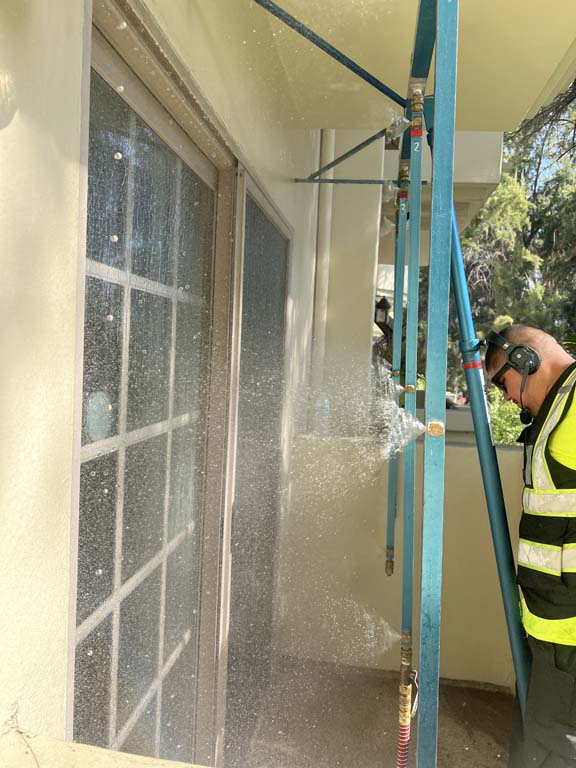
Depending on the investigation, ASTM E1105 field water penetration testing may be appropriate for evaluating installed exterior doors and their surrounding assemblies.
ASTM E1105 utilizes a calibrated water spray system and a controlled air-pressure differential to evaluate water penetration under specified test conditions.
This procedure differs from deck flood testing and is selected when the door assembly is a suspected source of water intrusion.
Infrared Thermography for Deck and Balcony Water Leaks
Infrared thermography can be a valuable supplemental tool during deck and balcony water intrusion investigations.
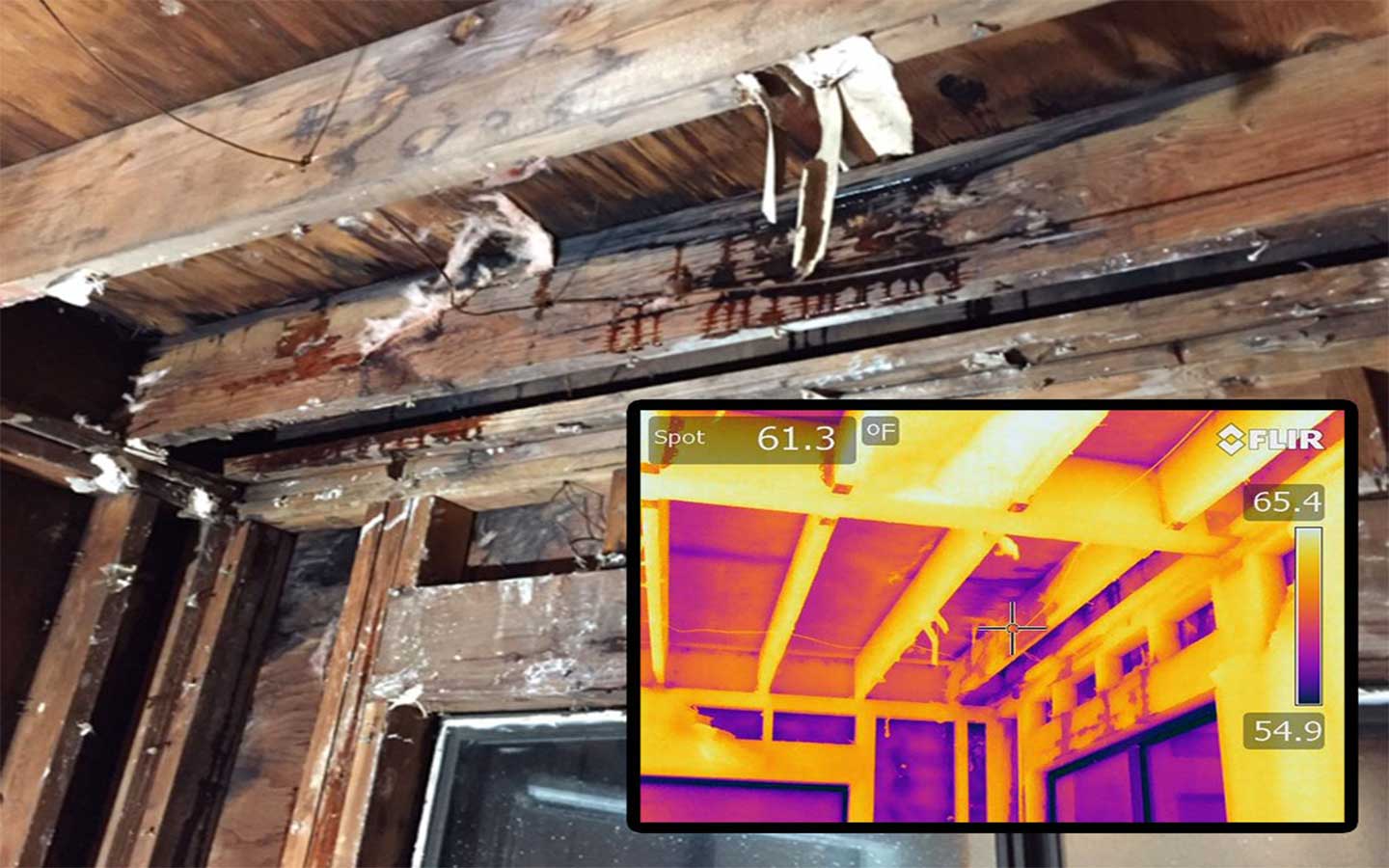
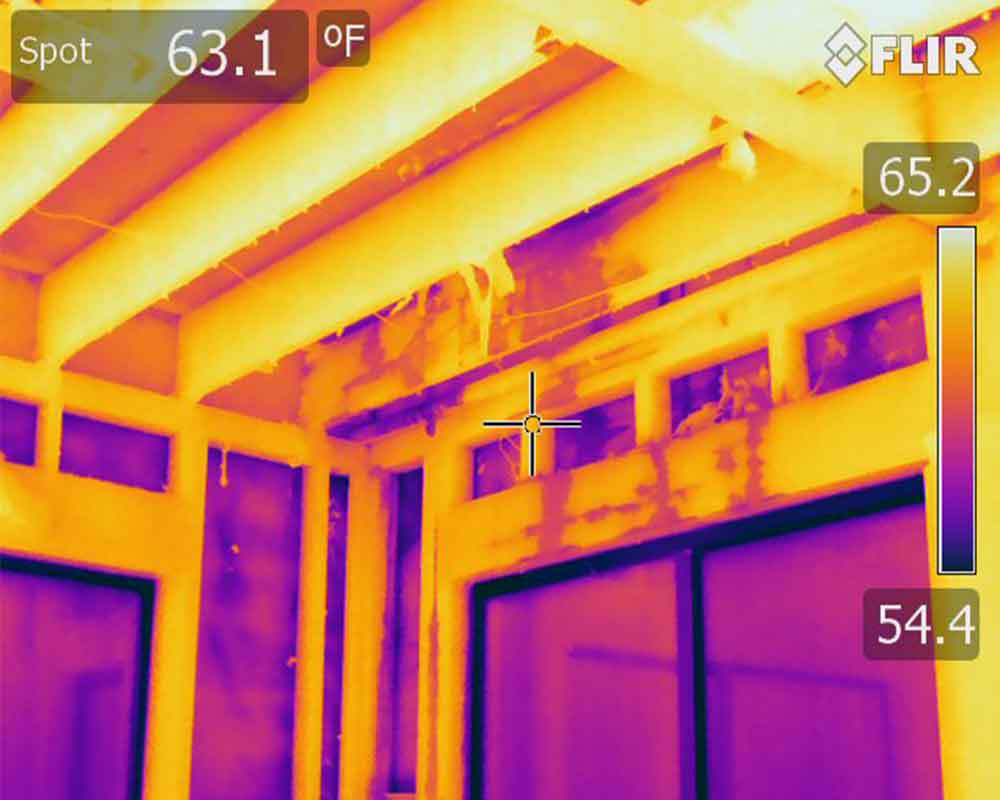
Building Leak Detection utilizes professional thermal imaging equipment, including the FLIR T560 infrared camera, to help identify temperature patterns that may be associated with moisture migration.
When environmental conditions are suitable, thermal imaging can help identify areas where water has entered concealed building assemblies.
For example, water penetrating through a second-story balcony may produce detectable thermal patterns on the ceiling or walls of the room directly below.
These patterns can assist investigators in identifying areas requiring further evaluation.
However, thermal imaging does not directly measure moisture content. Suspected moisture conditions should be corroborated through appropriate moisture measurements, visual observations, or additional investigative procedures.
Infrared thermography can be especially useful during controlled water testing because it may help investigators observe developing moisture-related thermal patterns that are not immediately visible to the naked eye.
Signs Your Deck or Balcony May Be Leaking
Water infiltration beneath exterior decks and balconies is not always immediately apparent.
In some buildings, moisture damage may develop for months or years before visible symptoms become noticeable.
Common warning signs include:
- Water stains on ceilings beneath balconies.
- Bubbling, peeling, or deteriorating interior paint.
- Soft or deteriorated exterior deck surfaces.
- Cracked or separating waterproof deck coatings.
- Moisture damage around sliding glass doors.
- Swollen hardwood flooring near balcony entrances.
- Water dripping from recessed ceiling lights.
- Deteriorated stucco beneath balcony edges.
- Rust stains around balcony railing attachments.
- Persistent dampness or discoloration after rainfall.
- Evidence of wood deterioration or fungal growth.
These conditions may indicate that water has penetrated the waterproofing system or entered through adjoining building components.
Prompt investigation can help identify the source before additional damage occurs.
Why Professional Balcony Water Intrusion Testing Is Important
Attempting to identify a balcony leak using an ordinary garden hose can produce misleading results.
Uncontrolled water application may expose several building components simultaneously, making it difficult to determine which location is responsible for the observed leakage.
Additionally, water may accumulate within concealed assemblies before appearing inside the building.
A professional investigation utilizes a systematic testing approach designed to evaluate suspected leakage locations under documented conditions.
Depending on the circumstances, this may include controlled water application, flood testing, calibrated spray equipment, moisture measurements, thermal imaging, and limited investigative openings when authorized.
The objective is not simply to reproduce a leak, but to develop an evidence-based understanding of the conditions contributing to water infiltration.
This information can be particularly important when evaluating construction defects, determining appropriate repairs, or documenting conditions for insurance claims and construction-related disputes.
Deck and Balcony Testing for HOAs and Property Management Companies
Deck and balcony water infiltration is a significant concern for condominium communities, apartment buildings, and other multifamily residential properties.
A leaking second-story balcony can cause damage to the residential unit below, affecting ceilings, walls, electrical components, flooring, and structural materials.
In multifamily buildings, identifying the source of leakage can also be important when determining repair responsibilities and evaluating construction-related deficiencies.
Building Leak Detection provides investigative services for:
- Homeowners associations and condominium communities.
- Apartment buildings and multifamily residential properties.
- Property management companies.
- Commercial buildings with exterior decks and terraces.
- General contractors and waterproofing contractors.
- Construction defect attorneys and forensic consultants.
Our testing services can help property managers and building owners make informed decisions regarding waterproofing repairs and further investigation.
Forensic Investigation and Documentation
When water infiltration involves construction defects, disputed repairs, or potential litigation, proper documentation is essential.
Building Leak Detection performs forensic water intrusion investigations designed to document existing conditions, testing procedures, observed leakage, and relevant building deficiencies.
Depending on the scope of services, our written reports may include:
- Description of the deck or balcony assembly.
- Identification of the areas investigated.
- Photographic documentation of existing conditions.
- Testing methods and equipment utilized.
- Applicable testing parameters.
- Moisture measurement observations.
- Thermal imaging documentation when applicable.
- Identification of observed water entry locations.
- Discussion of potential contributing deficiencies.
- Recommendations for additional investigation or corrective action.
Our investigative findings are based on the conditions observed and the results obtained during the evaluation.
Does Deck or Balcony Testing Damage the Building?
Many deck and balcony water intrusion investigations can begin with non-destructive testing methods.
Visual inspections, controlled water application, moisture measurements, and infrared thermography can provide useful information without removing existing building materials.
However, some waterproofing failures cannot be conclusively identified without exposing concealed components.
When destructive investigation is necessary, the proposed work should be discussed with the property owner and authorized before materials are removed.
It is also important to understand that water testing itself can introduce water into defective assemblies and may cause additional moisture damage.
Testing procedures should therefore be selected with consideration for existing conditions, potential risks, and the objectives of the investigation.
Frequently Asked Questions About Deck and Balcony Water Intrusion Testing
How do you test a balcony for water leaks?
Balcony water intrusion testing may involve controlled water application, flood testing, moisture measurements, infrared thermography, and examination of adjacent building components. The appropriate method depends on the balcony construction, waterproofing system, and suspected source of leakage.
Can you flood test a second-story balcony?
Certain second-story balconies may be suitable for flood testing. However, the structure must be evaluated to determine whether it can safely accommodate the additional water load. Drainage arrangements, waterproofing conditions, and potential damage to occupied areas below must also be considered.
What ASTM standard is used for deck flood testing?
ASTM D5957 is a recognized guide for flood testing horizontal waterproofing installations. Its applicability depends on the waterproofing assembly and project conditions.
Can a balcony leak even if the waterproofing membrane is intact?
Yes. Water may enter through defective door flashing, wall penetrations, railing attachments, deck-to-wall transitions, or other adjacent building components. An intact membrane does not necessarily mean the entire balcony assembly is watertight.
Can infrared cameras detect balcony water leaks?
Infrared cameras can help identify thermal patterns associated with moisture under suitable conditions. However, thermal imaging does not directly detect water or establish the source of leakage without supporting investigation.
Does a negative balcony water test mean the balcony does not leak?
No. A negative test indicates that water infiltration was not observed under the specific conditions evaluated. Intermittent leaks may require different exposure conditions, additional testing, or further investigation.
Can you guarantee that testing will identify the source of the leak?
No. Water intrusion can be intermittent and influenced by rainfall intensity, wind direction, temperature, building movement, and other environmental conditions. Although systematic testing can improve the likelihood of identifying a leak, no single investigation can guarantee that every source of water infiltration will be discovered.
How much does deck or balcony water intrusion testing cost?
The cost depends on the size and configuration of the deck, accessibility, testing method, number of suspected leakage locations, and complexity of the investigation.
A small residential balcony investigation may require considerably less time and equipment than testing multiple balconies at a condominium complex.
Building Leak Detection can evaluate the reported conditions and provide information regarding the anticipated scope and cost of testing.
Schedule Professional Deck or Balcony Water Intrusion Testing
If your deck or balcony is leaking, identifying the source of water infiltration is an important first step toward developing an effective repair strategy.
Building Leak Detection provides professional deck and balcony water intrusion testing throughout Los Angeles and Southern California.
Our services include ASTM-guided water intrusion investigations, appropriate deck flood testing, door and window water penetration testing, infrared thermography, and forensic documentation.
Whether you are investigating an isolated balcony leak or widespread waterproofing problems throughout a multifamily property, our objective is to provide reliable diagnostic information that supports informed repair decisions.
Contact Building Leak Detection to discuss your deck or balcony water intrusion concerns and schedule an investigation.