
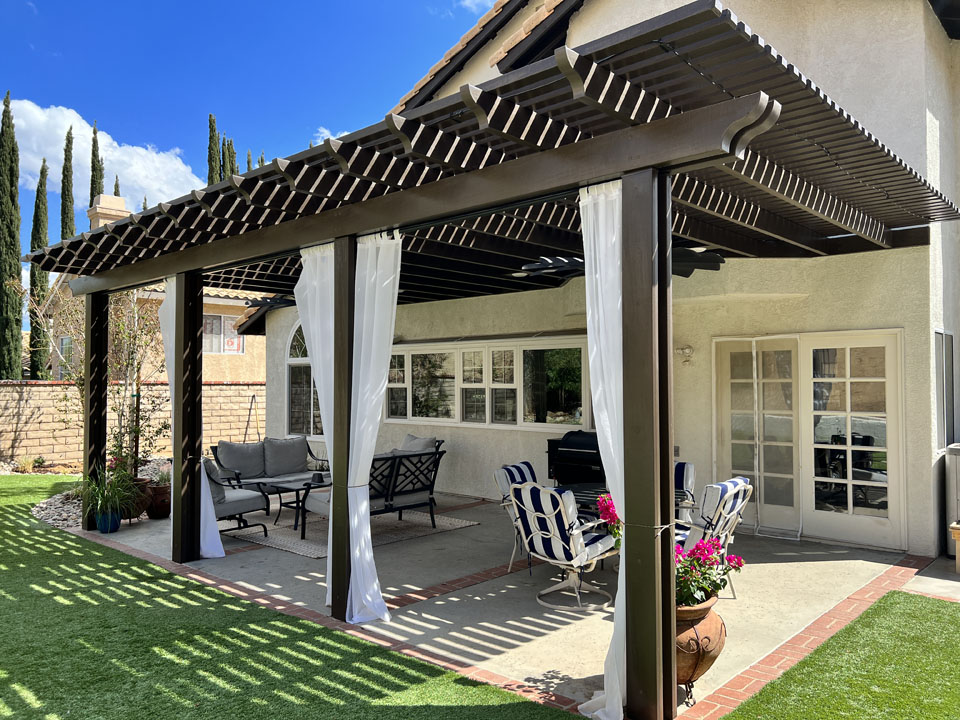
Why Does My Patio Cover or Pergola Leak Into My House?
If water appears inside your home when it rains, the source may be the connection between your patio cover or pergola and the exterior wall. A common entry point is the ledger board—particularly where its mounting bolts or structural screws penetrate the wall’s water-resistive barrier.
These connections can look sealed from the outside while allowing water behind the stucco to enter the wall. Understanding how this happens starts with the protective layer hidden beneath your exterior finish.
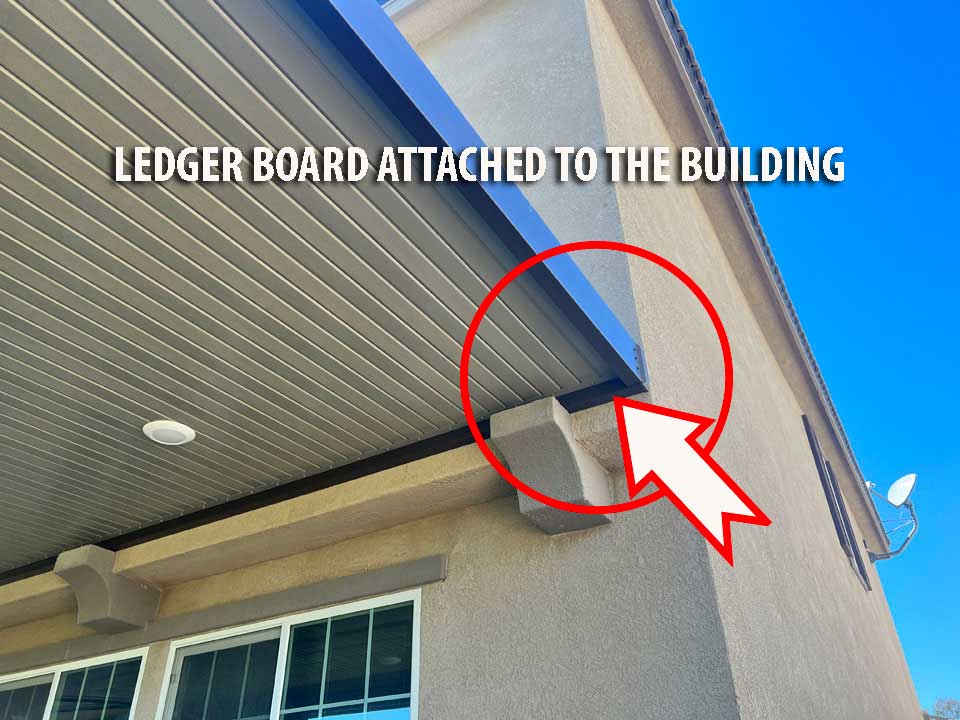
What Is a Ledger Board?
A ledger board is a horizontal structural member attached to the house that supports one side of an attached patio cover or pergola. Bolts or structural screws secure the ledger to suitable structural framing, which may include wall studs, depending on the design.
Those fasteners pass through the exterior wall assembly. In a stucco-clad home, that typically means penetrating the stucco, the water-resistive barrier, and the underlying sheathing before reaching the structural framing.
Each penetration needs proper water-management detailing. If the opening around a fastener allows water past the protective barrier, it can become a pathway into the house.

What Is a WRB, and What Does It Do?
WRB stands for water-resistive barrier, sometimes called a weather-resistive barrier. It is a protective layer installed behind stucco or other exterior cladding, typically over the wall sheathing.
Common WRB materials include building paper, housewrap, and liquid-applied membranes. Its main job is to resist liquid water that gets past the exterior finish and provide a drainage surface that directs that water toward the outside.
The WRB works together with flashing around windows, doors, and wall penetrations. These components must connect properly so water can drain down and out instead of entering the wall cavity. Source: Building America Solution Center
Think of the WRB as a concealed drainage layer. When a patio cover attachment penetrates that layer, the connection must preserve its ability to keep water out of the wall.
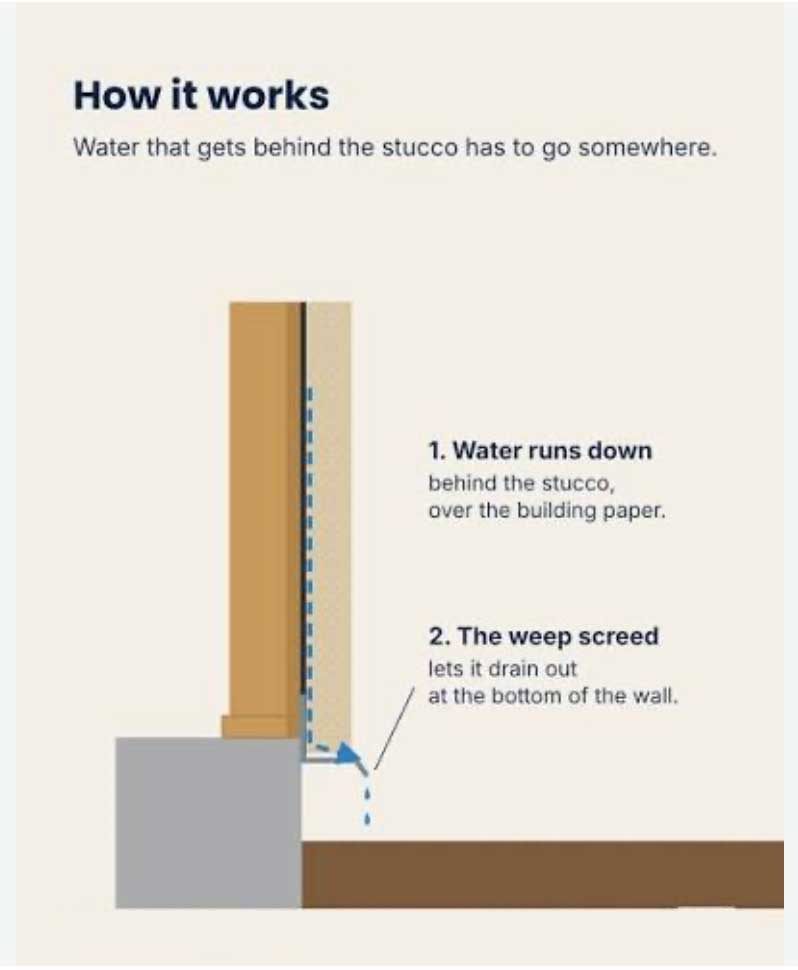
How Does Water Get Behind the Stucco?
Stucco sheds much of the rain that strikes the wall, but it is not a completely waterproof surface. Moisture can pass through cracks, joints, and other openings. Stucco can also absorb moisture.
Water that reaches the back of the stucco should drain down the exterior face of the WRB and exit through properly detailed flashing and drainage outlets, such as a weep screed. This drainage is an intended part of a functioning stucco wall assembly. Source: Building America Solution Center
Trouble starts when that water encounters a break in the drainage layer—such as an improperly protected ledger fastener hole.
How an Unsealed Ledger Bolt Hole Can Leak
The illustration shows one possible leak path:
- Rainwater gets behind the stucco. It reaches the WRB and moves downward.
- Water reaches the ledger attachment. A bolt or structural screw penetrates the WRB at this location.
- Water enters around the fastener. An unsealed opening, damaged WRB, or poorly integrated flashing can allow water through the protective layer.
- Moisture moves into the wall assembly. Water may follow the fastener or surrounding gaps, wetting the sheathing and framing.
- The leak becomes visible indoors. Moisture can eventually reach insulation, drywall, or interior finishes.
The opening does not need to be large. A small gap around a fastener can admit water during repeated or prolonged rain.
The important detail is where the fastener passes through the WRB. A bolt can be structurally secure while its penetration still allows water into the wall.
Suggested image caption: Rainwater draining behind stucco can enter an improperly protected ledger fastener penetration and travel into the wall assembly. Illustration shows a possible water path; actual construction varies.
Why Caulking the Outside May Not Stop the Leak
Applying caulk along the top of the ledger or around exposed bolt heads may seem like an obvious repair. However, water may already be traveling behind the stucco, beyond the reach of that surface sealant.
A durable connection needs flashing integrated with the wall’s WRB, along with appropriate protection at the fastener penetrations. The flashing should direct water outward over or away from the ledger while maintaining the wall’s drainage path. Source: Building Science Corporation
Surface caulking alone may leave the concealed entry point untouched. Sealant can also deteriorate or separate as materials move, making it important to evaluate the entire connection.
Signs the Ledger Connection May Be Leaking
Possible warning signs include:
- Water stains on an interior wall near or below the patio cover attachment.
- Bubbling paint, softened drywall, or damaged baseboards after rain.
- A recurring musty odor near the affected wall.
- A leak that began after a patio cover or pergola was installed.
- Repeated leakage despite exterior caulking repairs.
These symptoms can help guide an investigation, but they do not establish the source by themselves. Water can travel within a wall before appearing indoors, and nearby windows, roof intersections, or other penetrations may also contribute.
Even an open-roof pergola can be associated with a wall leak: rain falling on the house above the attachment can reach an improperly protected ledger connection.
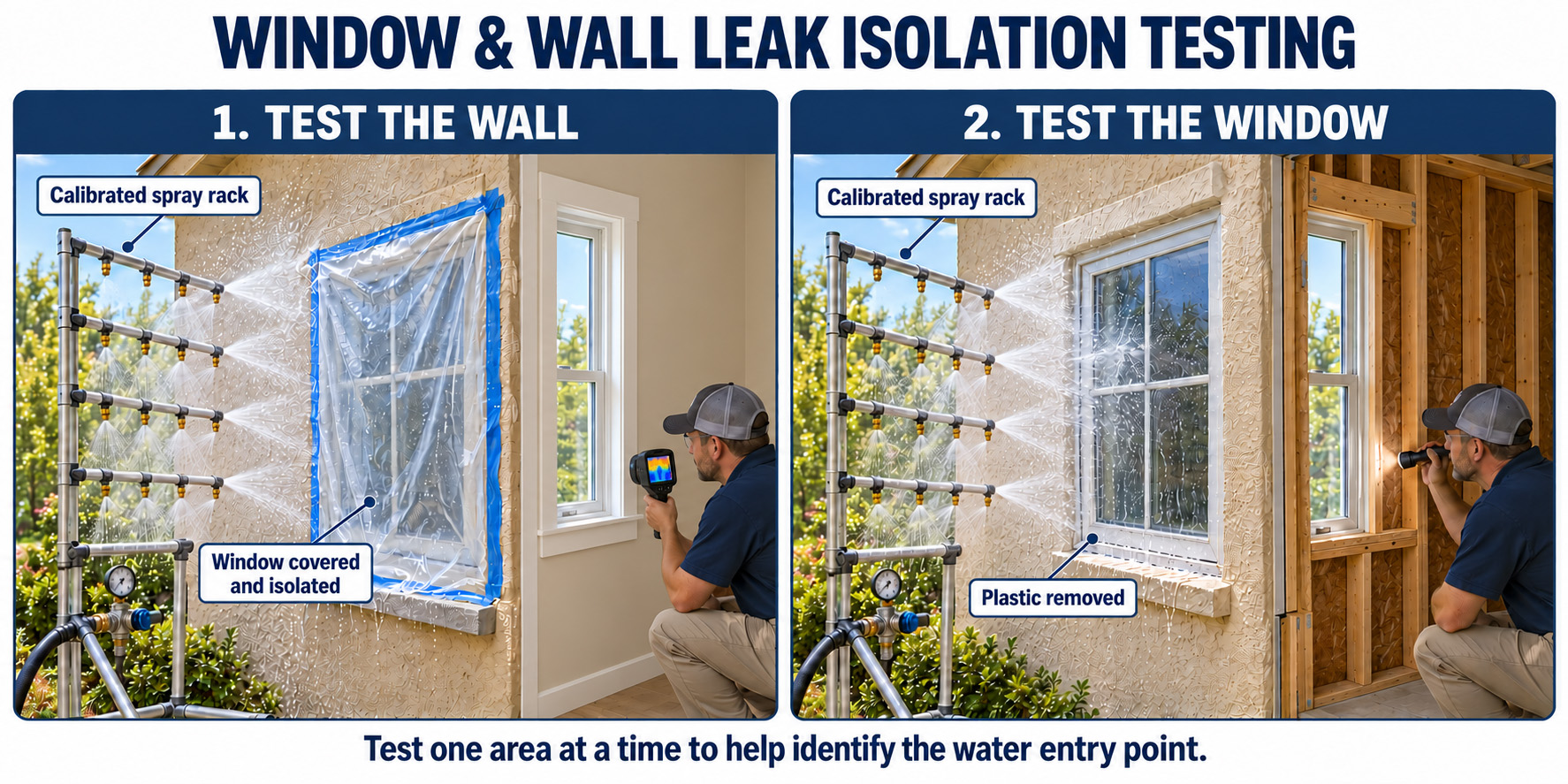
How Leak Detection Helps Find the Entry Point
A building leak investigation examines how water reaches the connection and where it crosses into the wall.
Depending on the conditions, this may involve inspecting the ledger and surrounding wall, taking moisture readings, and performing controlled water testing in selected areas. Thermal imaging can help identify temperature patterns that warrant further investigation, but those findings need confirmation with other methods.
In some cases, limited access behind the exterior finish is necessary to inspect the WRB, flashing, and fastener penetrations.
The goal is to identify the entry point before selecting a repair. Depending on the findings, repairs may involve restoring the WRB, correcting flashing, protecting fastener penetrations, and replacing moisture-damaged materials.
Stop the Water at the Connection
A patio cover or pergola should connect to your home without compromising the wall’s water protection. When ledger fasteners penetrate the WRB without proper detailing, rainwater draining behind the stucco can enter the wall through those openings.
If you notice interior leaks near an attached patio cover or pergola, have the ledger connection evaluated as part of a building leak investigation. Finding the actual water pathway is the first step toward a lasting repair.